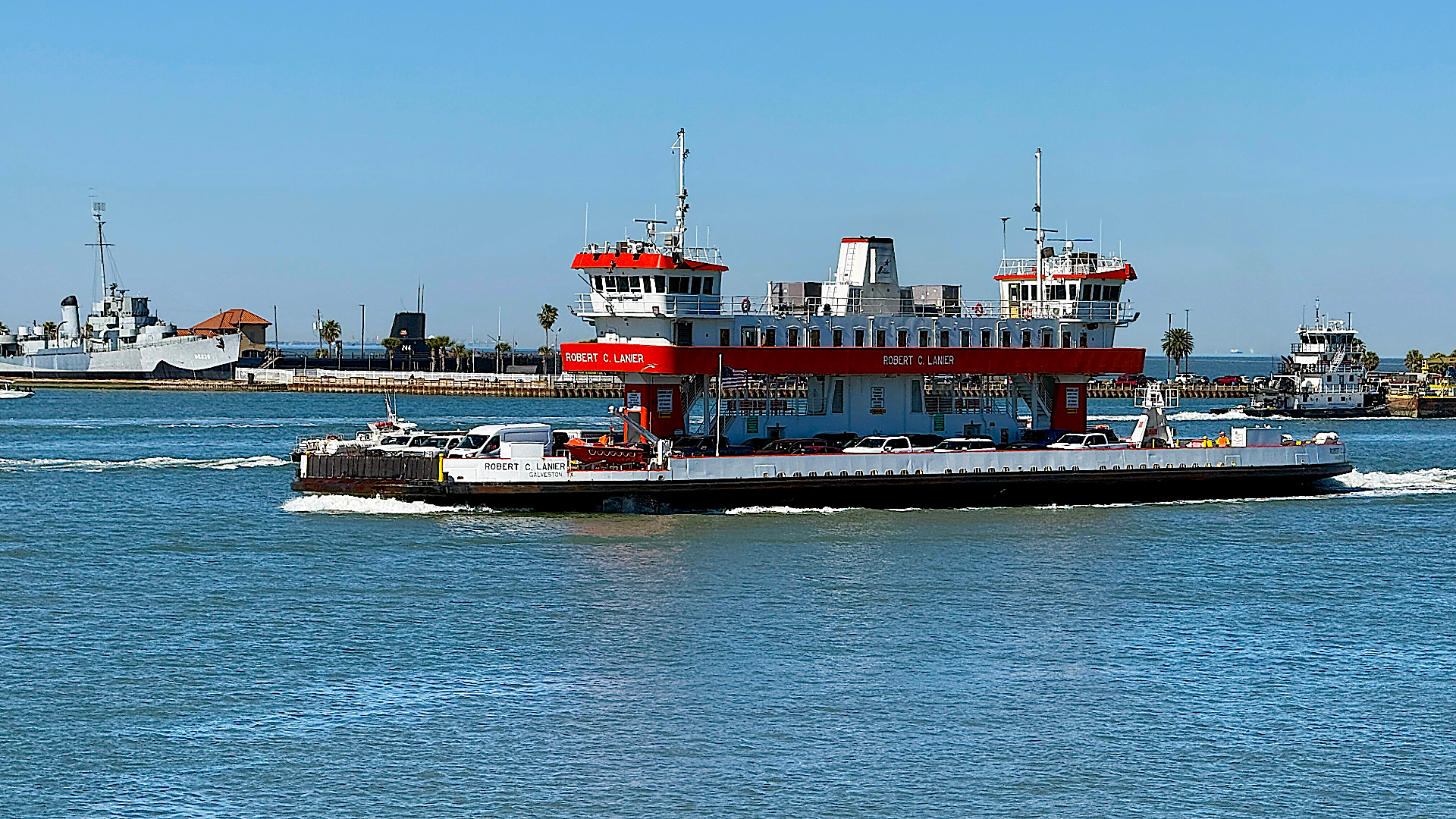
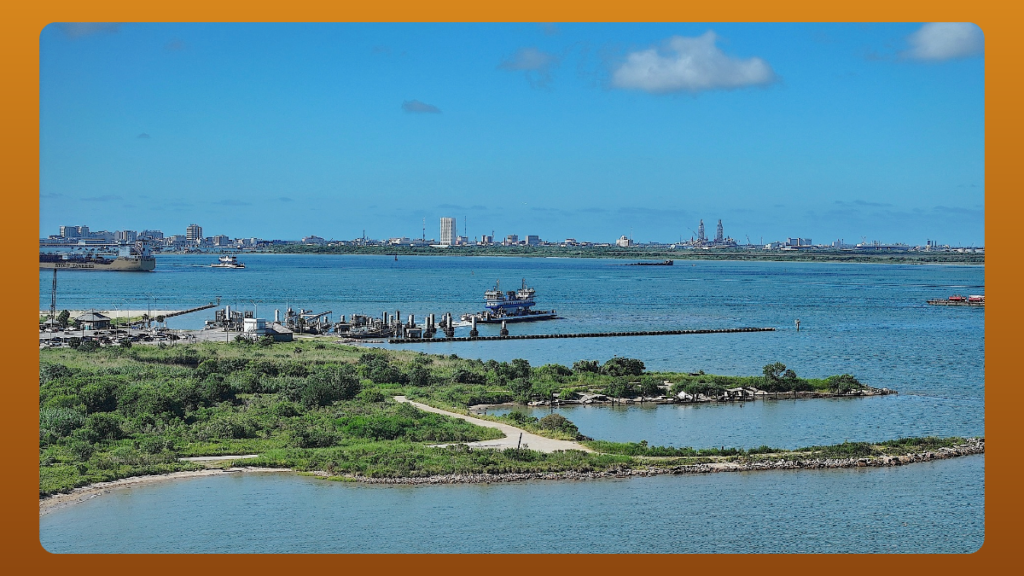
The Galveston–Bolivar Ferry serves as the vital transportation link between Galveston Island and the Bolivar Peninsula along Highway 87. Operated by the Texas Department of Transportation (TxDOT) since 1934, this historic, free ferry crossing provides continuous 24-hour service for commuters, tourists, and commercial drivers navigating the Upper Texas Coast.
Key Ferry Facts & Operating Details
- Distance & Duration: 2.7 miles across the Houston Ship Channel; approximately 18 minutes dock-to-dock.
- Cost: 100% Free for vehicles, pedestrians, and cyclists.
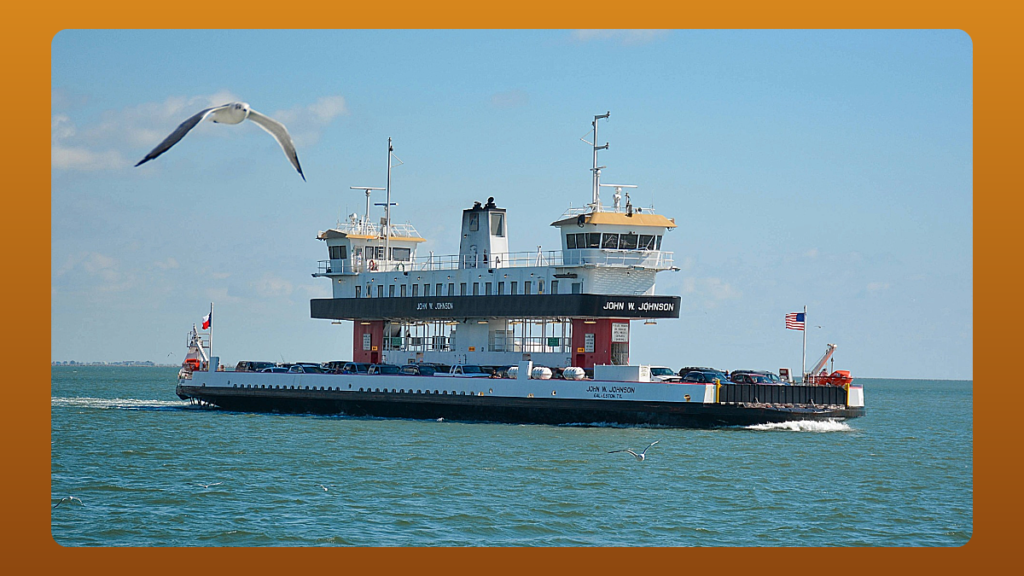
- Capacity: Each vessel holds roughly 70 vehicles, up to 500 passengers, and a 6-member crew.
- Commercial Vehicle Limits: Maximum 8 eighteen-wheelers per trip (up to 80,000 lbs each).
Schedules and Peak Operations
TxDOT scales ferry frequency based on demand to keep traffic moving across the channel:
| Time / Season | Operating Vessels |
|---|---|
| Overnight & Base Ops | 1 Ferry (Runs 24/7, year-round) |
| Morning Peak (6:30 AM) | 2 Ferries |
| Afternoon Peak | 3 Ferries |
| Holidays & Summer Peak | Up to 7 Ferries operating simultaneously |
Passenger Experiences: Walk-On vs. Drive-On
Whether you are commuting across Highway 87 or taking a scenic day trip, you can choose to drive your vehicle on board or park and walk on.
- Indoor Comfort: Passengers can relax in an air-conditioned cabin equipped with large panoramic windows.
- Observation Decks: Step outside to the upper deck for open-air views of ship traffic and coastal marine life.
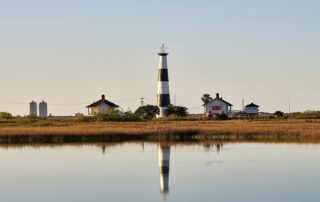
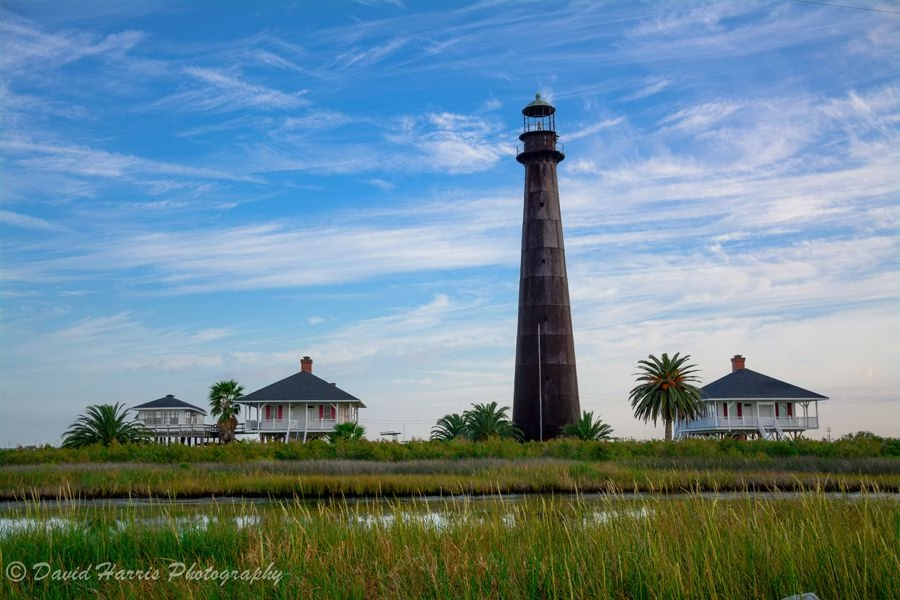
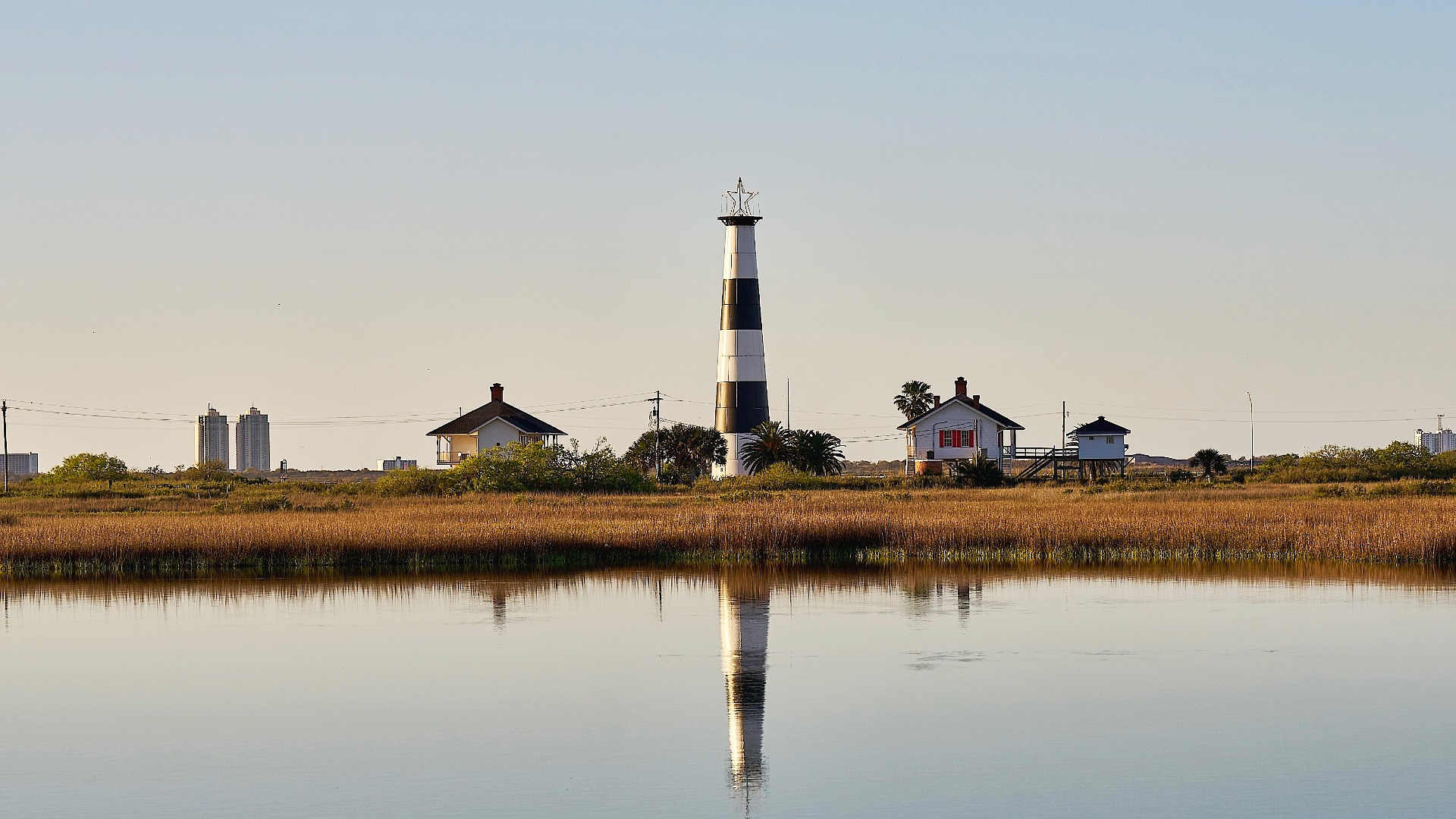
- Bolivar Sights: Spot historic Fort Travis and the iconic Bolivar Lighthouse as you depart the peninsula.
- Galveston Sights: View Seawolf Park, the U.S. Coast Guard Station, and the Galveston Yacht Basin upon arrival.
Wildlife and Industrial Harbor Views
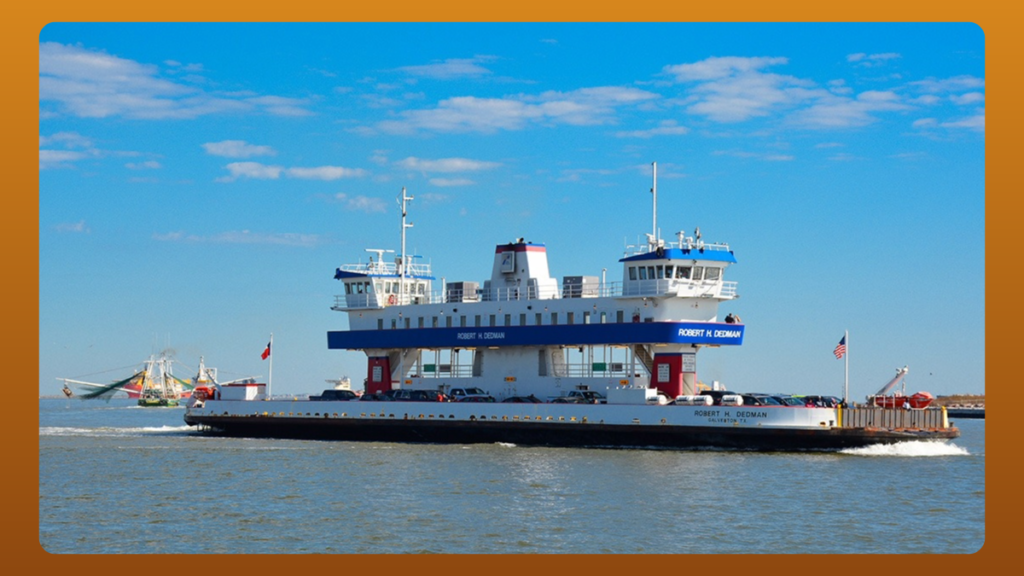
Crossing one of the busiest shipping lanes in the United States—with roughly 7,000 commercial vessels passing through annually—the trip provides a front-row seat to massive cargo tankers, working shrimp boats, and local fishing fleets. Atlantic bottlenose dolphins are frequently seen swimming alongside the ferries, making the ride a standout coastal experience for photographers and families alike.